
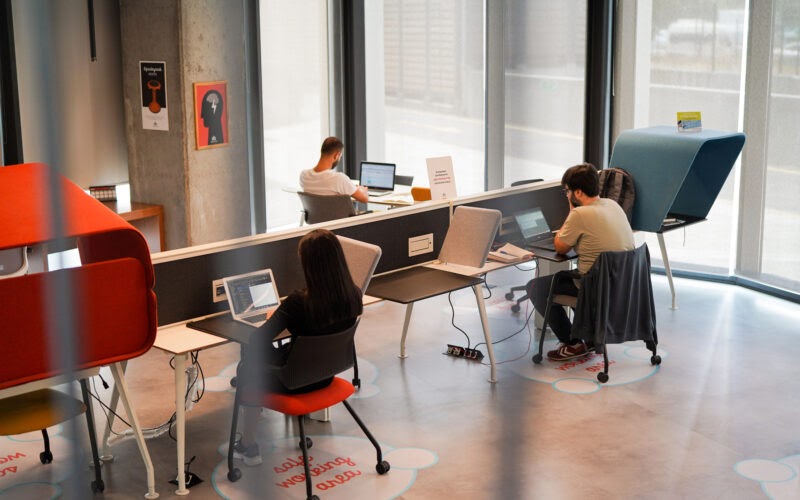

As businesses across Asia continue refining their post-pandemic work models, the 2026 trend in office interior design is pointing toward a fundamental shift: hybrid work is no longer a temporary arrangement but the organising principle behind workplace planning. Designers say companies are moving away from dense desk-heavy layouts and prioritising environments that support flexible collaboration, digital communication, and varied work styles.
In 2026, offices are expected to place stronger emphasis on adaptable zones that can be reconfigured throughout the day. Hot desks, mobile furniture, and multipurpose rooms will become even more common, allowing companies to respond to fluctuating team sizes. Industry analysts note that this shift is also driven by cost efficiency, as firms rethink how much space they truly need while still maintaining a strong physical presence.
Wellness-Driven Features Continue to Rise
Another major 2026 trend in office interior design is the continued rise of wellness-oriented features. While biophilic design and ergonomic furniture have become standard in recent years, next-generation workplaces are expected to go further. Designers anticipate increased investment in acoustic comfort, natural-light access, and improved air-quality systems. Wellness rooms for short breaks, quiet recovery spaces, and more breathable layouts will gain traction as employers focus on reducing burnout and attracting talent in competitive sectors.
With Hong Kong’s dense urban environment, interior designers say wellness considerations are no longer an optional aesthetic choice but a core demand from employees. These upgrades are also becoming part of broader sustainability and ESG strategies, pushing landlords and tenants to adopt long-term solutions rather than temporary fixes.
Smart Technology and AI-Integrated Workflows
Technology is set to play a defining role in the evolution of workplaces. The 2026 trend in office interior design shows growing interest in sensor-enabled systems, occupancy tracking, and AI-assisted space optimisation. Offices may incorporate smart lighting that adjusts automatically, climate controls that respond to real-time usage, and meeting rooms equipped with advanced AV tools to support hybrid collaboration.
Designers also expect a deeper integration of digital infrastructure into early planning stages. This includes planning for equipment loads, cable management, server ventilation, and secure connectivity. With more companies relying on cloud-based tools and cross-border collaboration, the technical backbone of an office is becoming as important as the visual design.
A Push Toward Sustainable and Modular Materials
Sustainability is at the centre of multiple conversations about the future workplace. Recycled finishes, low-carbon materials, and modular construction methods are expected to spread more widely in 2026. The 2026 trend in office interior design suggests that companies will increasingly favour materials that are durable, repairable, and eco-friendly. Modular elements, in particular, allow offices to evolve without tearing down large sections of the interior, reducing waste and saving costs over time.
Environmental certifications and carbon-impact reporting are also influencing tenant decisions, especially among multinational firms. Designers say this will shape procurement choices and encourage more transparent material sourcing.
As the workplace continues to adapt to social, technological, and economic shifts, the trends emerging for 2026 indicate a future where flexibility, wellness, and sustainability form the backbone of office design. Companies that plan ahead and embrace these changes are expected to gain an edge in talent retention and long-term operational efficiency.
